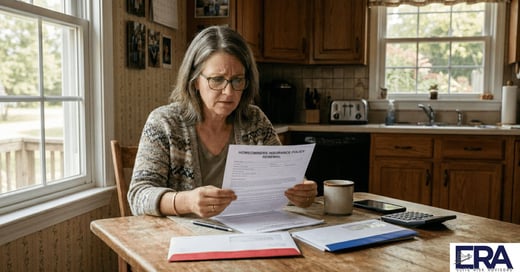
When you get home from work and call up all your friends, there's a good chance someone brings up what they're paying for homeowners insurance. In Kentucky, where current quote studies put the average cost of homeowners insurance at roughly $4,000–$4,500 a year for a policy with $300,000 in dwelling coverage, it's a question worth answering — and one we hear more than almost any other at Elite Risk Advisors.
Last updated: October 2026 · Reviewed by Brandon Dennis
The quick answer: For a policy with $300,000 in dwelling coverage, current quote studies put Kentucky homeowners at roughly $4,000–$4,500 a year — that’s a range across studies, not a single average (Insure.com: $4,025, updated 8/4/2026; Insurance.com: $4,471, updated 8/25/2026). Owensboro runs lower: Insure.com puts it at $3,239 (older data, updated May 2025). Our own clients across western Kentucky paid a median of $1,766 as of April 2026 — that’s ERA client data, not a statewide study, and we get there by representing multiple carriers and actually shopping the policy instead of letting it auto-renew. Curious what you’d pay? See your Owensboro rate in about 60 seconds.
(A quick note on how we do things before we continue the blog. At Elite Risk Advisors, we love sharing two things with anyone who will listen to us — great insurance information that can help fellow Owensboro area residents and great music that may get overlooked that shouldn't. Every post we publish is soundtracked by artists we love and think you should know — or know better. This week is ALL Jason Isbell. Pull up Southeastern or Something More Than Free and read along for more quality information.)
Here's the short of it: Kentucky homeowners are paying more than you might expect. At $300,000 in dwelling coverage, current studies from Insure.com and Insurance.com put the statewide figure between about $4,000 and $4,500 per year — and it's been climbing fast. But what you actually pay depends on where you live, who you're insured with, and, most importantly, whether anyone has shopped your policy recently.
What Kentucky Homeowners Actually Pay
The numbers are higher than most people realize — and they depend on which study you read, so we cite a range instead of pretending there's one true average. For a policy with $300,000 in dwelling coverage, Insure.com puts Kentucky at $4,025 per year (updated August 4, 2026) and Insurance.com puts it at $4,471 (updated August 25, 2026). Different studies, different methodologies — the honest takeaway is that statewide, $300K-dwelling coverage is running roughly $4,000–$4,500 a year right now.
Why so high? Kentucky sits in a region that sees its share of severe weather. Tornadoes, hail storms, ice storms, and occasional flooding all factor into how carriers assess risk here — and carriers price that risk into every Kentucky policy.
Our own numbers tell a different story. Across ERA's active homeowners book in western Kentucky (client actuals pulled April 2026), the median annual premium is $1,766 and the average is $1,957 — most clients fall between $1,500 and $2,500 per year. That's what our clients actually paid, not a statewide study, and dwelling coverage amounts vary across the book — so it isn't an apples-to-apples statewide average. But it's real, and it's what independent shopping across multiple carriers looks like in practice.
| Area | Annual premium ($300K dwelling)* |
|---|
| Kentucky (statewide) — Insure.com, updated 8/4/2026 | $4,025 |
| Kentucky (statewide) — Insurance.com, updated 8/25/2026 | $4,471 |
| Owensboro — Insure.com, updated 5/27/2025 (older data) | $3,239 |
| Elite Risk Advisors clients (western KY, April 2026 actuals) | $1,766 (median) |
*Study figures: Insure.com Kentucky and Insure.com Owensboro are based on $300,000 dwelling, $100,000 liability, $1,000 deductible; Insurance.com is based on $300,000 dwelling, $300,000 liability, $1,000 deductible. The Elite Risk Advisors figure is our active western-Kentucky homeowners book (median; average $1,957) — client actuals, not a study, with dwelling amounts that vary by home.
See your Owensboro rate — it takes about 60 seconds.
If you're paying closer to that statewide number, it's worth a conversation.
The reason isn't complicated. We work with carriers that price competitively for western Kentucky risk profiles, and we actively shop policies instead of letting them auto-renew year after year. If you're paying closer to that $4,000+ statewide range, there's a good chance an elite local independent agent can do better.
What Drives Your Premium
Your homeowners insurance premium is calculated based on your specific home and situation — not a one-size-fits-all number. Our Owensboro home insurance page walks through how we build that coverage. Here are the biggest factors:
Your home's replacement cost is the most important number. This isn't what you paid for your home or what it's worth on the market — it's what it would cost to completely rebuild it from the ground up at today's labor and material prices. A house that sold for $200,000 might cost $280,000 to rebuild today because of how much construction costs have climbed. Your coverage needs to reflect that rebuilt cost, not the market value.
Your home's age and condition matter a lot. Older homes, especially those with aging roofs, knob-and-tube wiring, galvanized plumbing, or original HVAC systems, typically cost more to insure. Carriers view these as higher risk because they're more likely to fail and cause a claim.
Your location and local risk factors in weather patterns, fire department response times, proximity to a fire hydrant, and crime statistics. Owensboro homeowners generally benefit from good fire department coverage and relatively accessible hydrant locations — both of which can lower premiums compared to more rural parts of western Kentucky.
Your coverage limits and deductible directly affect your premium. Higher coverage limits mean a higher premium. A higher deductible (the amount you pay out of pocket before insurance kicks in) means a lower premium. We'll talk more about deductibles in a moment because this is an area where a lot of homeowners unknowingly expose themselves to risk.
Your claims history plays a role too. Multiple claims in a short period — even small ones — can raise your rate or affect your ability to get certain coverage.
The Deductible Factor (Where Most People Get Tripped Up)
Here's something that surprises a lot of homeowners: many policies now include a percentage-based deductible for wind and hail damage, separate from your standard deductible.
Instead of a flat $1,000 or $2,500 deductible, this works as a percentage of your home's insured value. On a $300,000 home with a 1% wind/hail deductible, your out-of-pocket cost starts at $3,000. On a 2% deductible, it's $6,000.
This change has become more common across the industry — and a lot of homeowners don't realize their policy was updated until they file a claim. As we all know, Kentucky weather is something like a pipe bomb ready to blow. Don't wait to find out your wind and hail deductible more than doubled after it does.
We wrote a full breakdown of how percentage deductibles work if you want the details — it's worth reading before storm season.
Ways to Lower Your Kentucky Homeowners Premium
If your rate feels high, here are the most effective levers:
Bundle your home and auto insurance. This is consistently the biggest single discount available — and it's also the most misunderstood. Carrying both policies with the same carrier typically saves 10–20% on both. But here's where people leave money on the table: they compare the auto price in isolation instead of looking at what they're paying across both policies combined.
We see it all the time. We quote a bundle and save someone $500 on their homeowners policy. Their auto quote comes in $200 higher than what they're currently paying. They balk at the auto price and walk away — not realizing they just turned down a net savings of $300 a year on their total insurance spend.
The number that matters is the combined total. If you're paying $X for home and $Y for auto today, the question isn't whether our auto quote is higher than your current auto rate. The question is whether our bundle is lower than your current $X + $Y. More often than not, it is — and with better coverage.
If you've never had someone run both numbers side by side for you, that's the conversation worth having.
Raise your deductible thoughtfully. Moving from a $1,000 deductible to $2,500 can reduce your premium meaningfully. Just make sure you have the cash available to cover that deductible if something happens. This is a real trade-off, not a free savings.
Update your roof. For most Owensboro homeowners, this isn't an issue — the majority of homes in the area got a brand new roof in the last 12 months. If you didn't get a new roof last year and yours is more than 15–20 years old, it's likely adding to your premium. A newer roof — especially one made from impact-resistant materials — can lower your rate and improve your coverage terms. Kentucky law (KRS 304.13-342) now requires insurers to offer premium discounts for roofs built or retrofitted to the FORTIFIED standard — we break down how that works on our rental property insurance page.
Add home security features. Smoke detectors, monitored alarm systems, and deadbolt locks all qualify for discounts with most carriers. Some carriers also offer discounts for smart home devices like water leak sensors.
Review your coverage every year. Your insurance should keep up with your life. If you've made significant home improvements, paid down your mortgage substantially, or your home's rebuild cost has changed, your policy may be due for an update. Sitting down with your agent annually — even just for 15 minutes — keeps things current.
What Our Owensboro Clients Actually Pay
Statewide study averages are one thing — here's what our own clients actually paid. The coverage behind these numbers sits on our home insurance page.
Across our entire active homeowners book in western Kentucky (pulled April 2026):
- Median annual premium: $1,766
- Average annual premium: $1,957
- Most common dwelling coverage range: $225K–$425K replacement cost
- Most common wind/hail deductible: 1–2% of dwelling, with a $1,000–$2,500 all-other-perils deductible
These are ERA client actuals, not a statewide study — dwelling amounts and deductibles vary across the book, so don't read them as what every Kentucky homeowner would pay. Why do our clients tend to land lower? A few reasons:
- Independent shopping. We write through seven carriers including Erie, Openly, and Branch. When one carrier files a rate increase, we can usually move the client somewhere less expensive instead of just absorbing it.
- Bundling almost every client. Over 80% of our homeowners clients also have auto with us, which unlocks the biggest single discount most carriers offer.
- Local claim history matters. Daviess County isn’t the tornado alley of western Kentucky — rating here is materially better than in counties like McCracken or Calloway.
Which Kentucky Carrier Fits Your Home Best?
The right fit depends on the home, the roof age, the prior claim history, and whether there’s an auto policy to bundle. There’s no single carrier that always wins. Here’s how we think about it in our day-to-day:
- Erie — typically the best value for home + auto bundlers in Daviess County.
- Branch — a fit for well-maintained homes under 40 years old. The bundle discount is baked into the quote.
- Openly — usually our pick for higher-value homes ($400K+ dwelling) where guaranteed replacement cost and scheduled personal property matter.
- Foremost / Progressive’s home markets — used for older homes, rental dwellings, or profiles the standard markets decline.
We quote the home through multiple carriers on every new client before recommending one — the spread between quotes on the same home is often substantial, and that spread is the cost of never shopping independently.
When to Shop Your Policy
Some policies just sit there year after year, not moving an inch when the anchor goes up. That's not loyalty — that's just inertia.
Most people aren't making a conscious choice to overpay. They're just running with their eyes closed renewal after renewal, trusting that someone would say something if the rate got out of hand.
It's worth reviewing your policy when:
- Your renewal premium increases more than 10%
- You've made significant changes to your home (renovation, addition, finished basement)
- You've had a life change (marriage, kids, new vehicle, home office)
- You haven't compared rates in more than 3 years
As an independent agency, we work with multiple carriers — not just one. That means when we quote your Owensboro home insurance, we're comparing options across the market to find the right fit, not just the one policy we're required to sell. If you've been with the same carrier for years and haven't checked, you may be surprised at what's available.
For a lot of homeowners, the policy they have is the first one they ever got. Nobody told them there was anything better. Home was a dream, one they'd never seen (NOT a Morgan Wallen song, people) — until someone finally showed them what it could look like.
Frequently Asked Questions
What is the average cost of homeowners insurance in Kentucky?
For a policy with $300,000 in dwelling coverage, current quote studies put Kentucky at roughly $4,000–$4,500 per year — Insure.com reports $4,025 (updated August 2026) and Insurance.com reports $4,471 (updated August 2026). Rates have been rising due to severe weather exposure and rising construction costs, and different studies use different methodologies, which is why we cite a range rather than a single number.
Why is homeowners insurance so expensive in Kentucky?
Kentucky's exposure to severe weather — tornadoes, hail, ice storms, and flooding — makes it a higher-risk state for carriers. Combined with rising labor and material costs that drive up replacement values, premiums have climbed significantly in recent years. Carriers price based on risk, and Kentucky has seen a lot of weather.
How can I lower my homeowners insurance premium in Kentucky?
The most effective lever most people miss is bundling home and auto with the same carrier — that typically saves 10–20% on both policies. Beyond that, updating an aging roof, raising your deductible thoughtfully, and shopping your policy with an independent agent who works with multiple carriers all make a real difference. If you haven't compared rates in three or more years, there's a good chance something better is available.
Is homeowners insurance required by law in Kentucky?
No. Kentucky has no law requiring you to carry homeowners insurance. If you have a mortgage, though, your lender will require it — the home is their collateral, and every mortgage agreement we see makes coverage a condition of the loan. If your home is paid off, going without coverage is legal, but it means absorbing the full cost of a fire, tornado, or hailstorm yourself. On a $250,000 home, that is not a risk we would take, and it is not one we recommend.
What does homeowners insurance not cover in Kentucky?
The two biggest gaps are flood and earthquake — both are excluded from standard policies and require separate coverage. That matters here: the Ohio River and its tributaries put real flood exposure on parts of Daviess County, and western Kentucky sits near the New Madrid Seismic Zone. Standard policies also exclude sewer and drain backup (an inexpensive endorsement fixes that), normal wear and tear, and gradual deterioration — insurance covers sudden, accidental damage, not maintenance. If you are not sure which of these apply to your home, that is exactly the kind of policy review we do at no charge.
How much is homeowners insurance for a $300,000 home in Owensboro, KY?
For a $300,000 dwelling on a well-maintained Owensboro home with a 1–2% wind/hail deductible and a decent claim history, our clients typically pay between $1,400 and $2,200 per year depending on roof age, construction, and whether they’re bundling with auto — those are ERA client actuals, not a study average. Insure.com's Owensboro study figure is $3,239 (updated May 2025), and Daviess County generally rates better than much of western and southeastern Kentucky on weather exposure.
What is the typical wind and hail deductible for Kentucky homeowners?
Most Kentucky carriers write wind/hail as a percentage deductible — commonly 1%, 2%, or 5% of the dwelling limit. On a $300,000 home, a 2% wind/hail deductible means you pay $6,000 out of pocket on a qualifying storm claim before coverage kicks in. This is separate from the all-other-perils deductible (usually a flat $1,000–$2,500). We walk every new client through what their specific deductibles actually mean in dollar terms before they bind.
Is there a state-backed insurance pool in Kentucky if carriers won’t write my home?
Kentucky has a FAIR Plan (Kentucky Fair Access to Insurance Requirements) that provides basic property coverage for homes that can’t get coverage in the standard market — for example, older homes, homes with recent non-weather claims, or homes in very high-risk locations. FAIR Plan coverage is typically more expensive and more limited than standard market coverage, and it’s designed as a last resort. If you’ve been declined by multiple carriers, we can help you apply or shop high-risk specialty markets first.
One thing worth naming, because it changes both the price and the policy form: every figure above is for a home you live in. If the house is a rental you own rather than your residence, a homeowners form is the wrong contract — most of them limit or exclude coverage once tenants move in. That is a different quote, and we cover it on our landlord insurance in Owensboro page.
Get a Free Quote from Elite Risk Advisors
Getting a second opinion on your homeowners policy is, compared to most things, relatively easy. (Forced that one so you would have a reason to listen to one of Jason's best songs. I hope you think the song is so good that you can forgive me...) We're based in Owensboro and serve homeowners across western Kentucky. One conversation. No obligation. Just clarity.
Get a free quote at eliteriskagent.com/get-a-quote or give us a call. We're here.
Sources
- Insure.com: Average Cost of Homeowners Insurance in Kentucky — $4,025/year at $300K dwelling; updated August 4, 2026 (pulled September 1, 2026)
- Insurance.com: Average Homeowners Insurance Rates by State — $4,471/year for Kentucky at $300K dwelling; updated August 25, 2026 (pulled September 1, 2026)
- Insure.com: Average Homeowners Insurance Cost in Owensboro, KY — $3,239/year at $300K dwelling; updated May 27, 2025 (pulled September 1, 2026)
- ERA active homeowners book, western Kentucky — median $1,766, average $1,957; client actuals pulled April 2026